earth laboratory
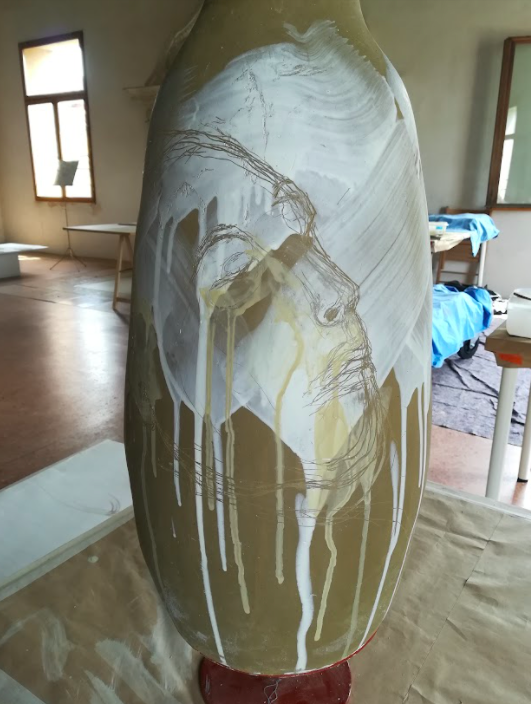
Earth Laboratory stage of the project was ongoing for eight weeks in Research Pavilion #3 between July the 8th and August the 28th, 2019. A display showing the experiences, knowledge, and material configurations that were produced in the earlier stages of the project was already set up during the opening week in May. The Laboratory gave tangible forms to the research outcomes and made them visible to the visitors through materials and processes. During Earth Laboratory, the team formed of established ceramic artists, artist-researchers, and two research assistants built 18 pots of 50-100 cm in height. Local brick clay from the collaborating brick factory in the Veneto area was used. The pots were made with a conventional hand-building method, and when the pots were finished, they were painted with the soil samples, which were gathered and analysed in the second stage. Visitors to the pavilion were able to follow this practice-based laboratory. The project was presented through a display that showed outcomes of the material research as well as pictorial and textual narratives of the fieldwork. Several printed articles presenting environmental research on the area were also available for reading.
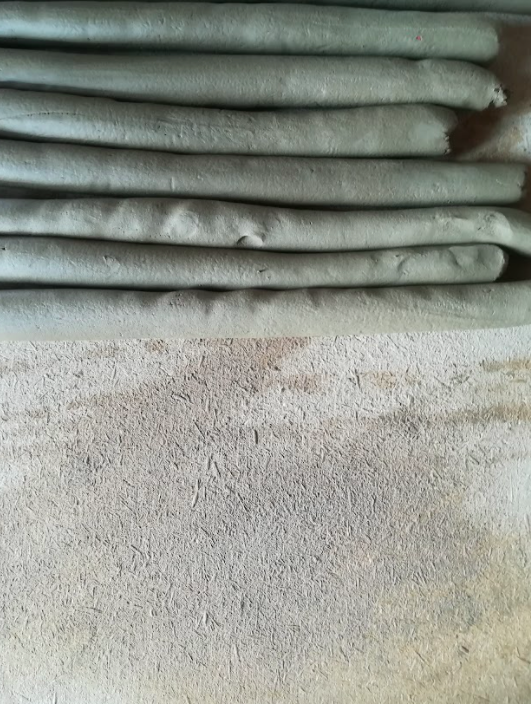
The brick clay presented its challenges in coiling, which is one of the most primitive ways of forming pottery. In this hand-building technique, coils of clay are layered upon another and joined to form a solid surface. Coiling is simple, yet time-consuming, repetitive labour . To be able to make aesthetically pleasing and stable forms requires skill that can be achieved through tacit knowledge. Relating to the essence of Venetian materiality made struggling with Venetian brick clay when building the forms more meaningful.
https://workingwithsoil.aalto.fi/earth-laboratory/
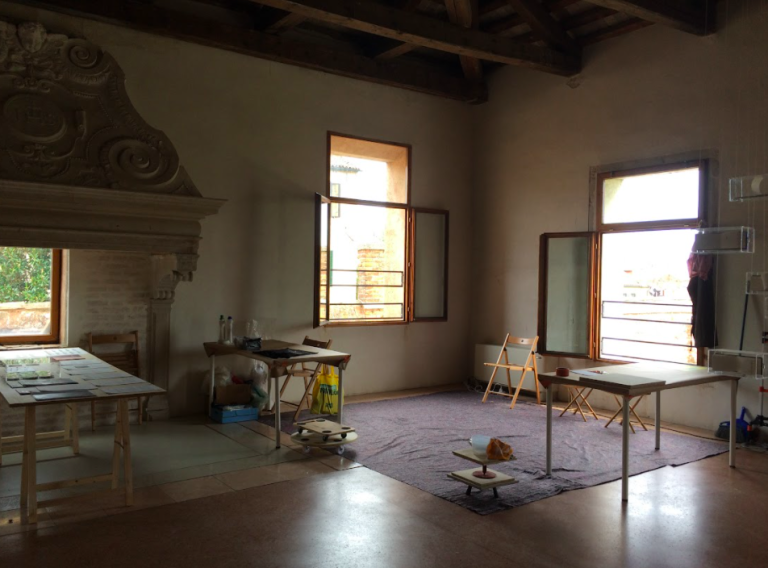
Photo Credits: Tzuyu Chen, Özgü Gündeşlioğlu, Pauliina Purhonen & Riikka Latva-Somppi.